
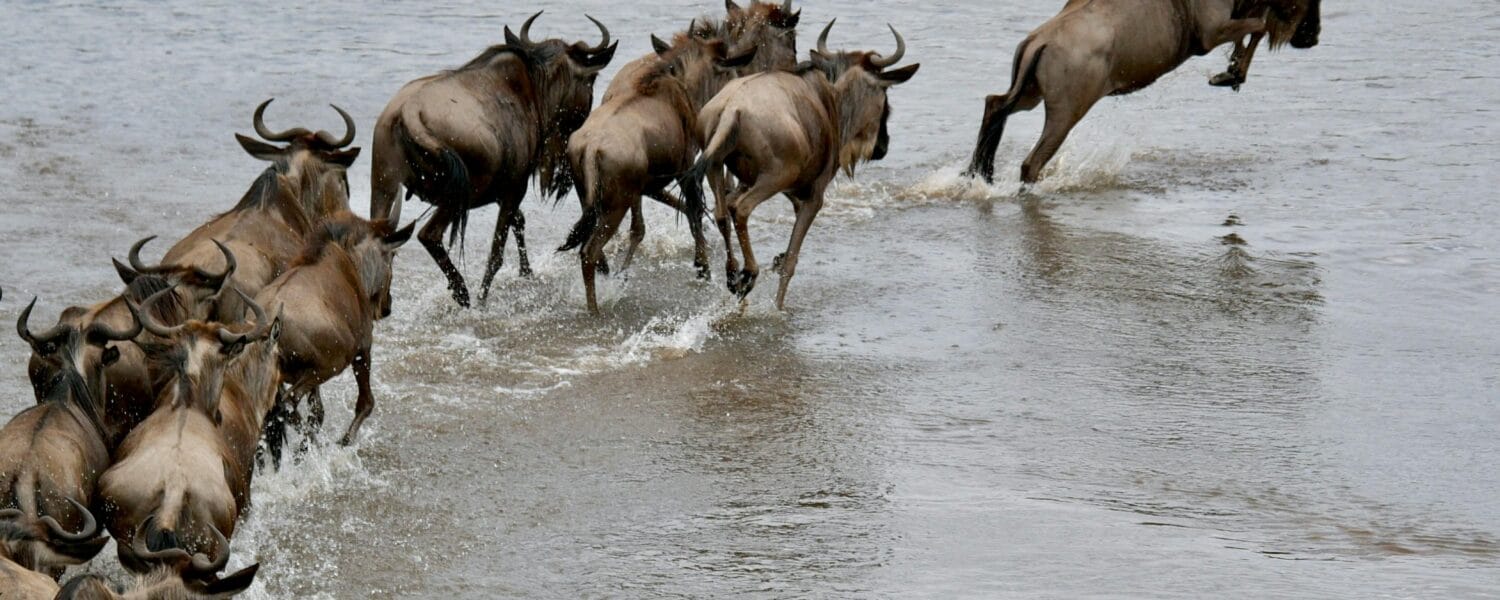
The Serengeti ecosystem is home to one of nature’s most awe-inspiring phenomena: the Great Wildebeest Migration. While many travelers have heard of this legendary journey, few understand the complex mechanisms that drive it or the sheer scale of the spectacle. If you are planning your Tanzanian adventure with Saving Tour, understanding this event is essential to crafting the perfect safari itinerary.
What is the Great Migration?
The Great Migration is the continuous, circular movement of over 1.5 million wildebeest, accompanied by hundreds of thousands of zebras and gazelles, across the Serengeti-Mara ecosystem. It is not a single event but a year-long, perpetual journey driven by the search for fresh grazing and water.
Surprising Facts You Didn’t Know
- Safety in Numbers: The herd uses “swarm intelligence” to navigate. Even though they have no leader, the collective movement helps them find resources and evade predators.
- The Zebra-Wildebeest Partnership: Zebras and wildebeest have a symbiotic relationship. Zebras eat the tough top layer of grass, revealing the shorter, more nutritious grass beneath, which the wildebeest prefer.
- The Birth Wave: During the calving season in the southern Serengeti, nearly 500,000 calves are born within a two-to-three-week period. This “predator satiation” strategy ensures that even if many calves are taken by predators, a vast majority survive.
- They are not just Wildebeest: While they are the stars, the migration includes 200,000 zebras and 350,000 gazelles, creating a diverse and dynamic herd structure.
When Does the Migration Happen?
The migration is a year-round cycle. However, timing your visit depends on what part of the journey you wish to witness:
- January – March (Calving Season): The herds are in the southern Serengeti and Ndutu area. This is the best time to see predator-prey action as new calves are born.
- April – June (The Trek North): The herds move through the central and western Serengeti, heading toward the Grumeti River.
- July – September (The River Crossings): This is the “peak” season for many, as herds brave the crocodile-infested waters of the Mara River to cross into Kenya’s Masai Mara.
- October – December (The Return): The herds migrate south again, following the short rains, returning to the southern plains to start the cycle anew.
Why Does the Great Migration Occur?
The driving force is survival. The wildebeest are essentially “nomadic grazers.” They are genetically programmed to follow the rain. Because the Serengeti is a vast landscape with localized rainfall, the grass grows in different areas at different times. The herds follow the scent of rain and the resulting fresh, phosphorus-rich grasses. It is a desperate, relentless race to stay fed and hydrated in a changing climate.
Why You Should Witness It Once in a Lifetime
Beyond the migration, Serengeti offers an unparalleled wildlife experience. You get to witness the “Big Five”—lion, leopard, elephant, buffalo, and rhino—in their natural habitat. The vast plains provide some of the best photographic opportunities in the world, where the golden hour light dances across the savannah, creating silhouettes of acacia trees against the backdrop of massive herds.
Essential Tips for the Serengeti Traveler
- Choose the Right Vehicle: A customized 4×4 safari vehicle with a pop-up roof is mandatory. It provides the height needed to spot animals in tall grass and the stability required for rough terrain.
- Pack for All Seasons: The Serengeti can be hot during the day and surprisingly cold at dawn. Bring layers, high-quality binoculars, and a camera with a good zoom lens.
- Respect the Wildlife: Always maintain a respectful distance. Saving Tour guides are trained to position vehicles in a way that minimizes stress to the animals while ensuring you get the perfect photographic angle.
- Stay Patient: Safari is not a movie; it is reality. Sometimes the best sightings happen when you are waiting patiently near a waterhole. Let your guide use their expertise to read the signs of the bush.
Why Book with Saving Tour?
At Saving Tour, we don’t just take you on a game drive; we immerse you in the heartbeat of the Serengeti. Our guides are local experts who understand animal behavior patterns, ensuring you are in the right place at the right time. We prioritize sustainable tourism and personalized service, making sure your Tanzanian safari is a once-in-a-lifetime experience. We take care of every detail, from park fees to luxury tented camp bookings, so you can enjoy the magic of nature without worry.


